
Most people think CPR training is meant for doctors or paramedics. That assumption made sense years ago, when emergency care was mostly discussed in medical settings. But real life rarely works that way. Medical emergencies happen in offices, schools, homes, gyms and public places. The person standing nearby is usually not a medical professional.
That is why a CPR course has become much more common across different industries. Someone might sign up because their employer asks for it, or because they want to feel prepared if something happens at home. Others complete it simply because they do not want to stand helplessly in an emergency. When people search online for CPR training near me, the reason is often very practical. They want to know what to do in those first few minutes before help arrives.
So who actually benefits from CPR training today? The answer includes far more people than most would expect.
Why Is CPR Training No Longer Limited to Healthcare Workers?
Healthcare professionals obviously rely on CPR skills, but they are rarely the first people at the scene of a medical emergency. By the time paramedics arrive, several minutes may have passed. Those early minutes matter.
Because of this, CPR training has gradually moved into everyday workplaces and community environments. Schools encourage it, gyms require it, and many companies now include it as part of their safety preparation. The logic is simple: if someone nearby knows how to begin CPR immediately, the chances of survival improve.
The idea of CPR as a specialised medical skill has slowly shifted. Today it is better understood as a life skill that ordinary people can learn.
Which Professions Commonly Benefit from CPR Training?
Certain professions deal with large groups of people or physically active environments. In those settings, CPR knowledge becomes especially useful.
People working in education, childcare, hospitality, sports coaching, fitness instruction, disability support and aged care often complete a CPR course as part of their professional preparation. Construction supervisors and workplace safety officers may also receive CPR training because they are responsible for responding to incidents on site.
Even when CPR certification is not strictly required, employers often see it as a valuable capability. A staff member who can respond calmly during an emergency adds an extra layer of safety to the workplace.
Why Do Teachers and Childcare Workers Need CPR Skills?
Anyone who works with children understands that supervision involves more than simply watching over activities. Children explore, climb, run and occasionally take risks without realising it.
While serious emergencies are uncommon, educators need to be ready if something unexpected happens. CPR training prepares teachers and childcare workers to respond to breathing difficulties, choking incidents or sudden loss of consciousness.
A HLTAID009 CPR course also explains how CPR techniques differ between adults, children and infants. That distinction matters in early childhood settings where staff must respond quickly and appropriately.
For many educators, the training provides reassurance. It means that if a serious situation arises, they will not be learning what to do at the moment.
Can CPR Training Make Someone More Employable?
In some industries, CPR certification has become an advantage when applying for work. Employers often notice candidates who already hold practical safety qualifications.
Fields such as fitness, childcare, tourism and community services frequently value applicants who have completed a CPR course. It suggests the person understands responsibility and takes safety seriously.
For students entering these industries, CPR training can also make the transition into the workforce easier. The course is relatively short, yet it adds a recognised skill that employers appreciate.
Why Do Fitness Trainers and Sports Coaches Need CPR Certification?
Exercise environments encourage people to push their limits. Most of the time this leads to improved health and performance. Occasionally, however, intense physical activity can expose underlying medical conditions.
This is why gyms and sports facilities encourage trainers to maintain CPR certification. During a HLTAID009 CPR course, participants practise identifying cardiac distress and performing chest compressions until emergency services arrive.
Many training facilities now keep automated external defibrillators on site. CPR training includes learning how to operate these devices safely, which can be critical in sudden cardiac emergencies.
What About Parents and Family Members?
CPR training is not limited to workplaces. Many parents enrol in a CPR course simply because they want to feel prepared.
Children can experience breathing emergencies caused by choking, allergic reactions or severe asthma episodes. Knowing how to respond in those moments can make an enormous difference.
Families who care for elderly relatives sometimes choose CPR training for similar reasons. Health conditions can change suddenly, and having at least one person in the household who understands CPR provides reassurance.
Why Are Community Volunteers Choosing CPR Training?
Community groups bring people together in parks, sports fields, schools and local venues. Volunteers often organise activities for children, sporting clubs or neighbourhood events.
Although volunteers are not medical professionals, they frequently take responsibility for groups of people. For that reason, many choose to enrol after searching for CPR training near me.
It is not about expecting emergencies. It is about being prepared in case something unexpected occurs.
Is CPR Training Useful for Office Workers?
Office environments may seem quiet compared with construction sites or sports venues. However, cardiac emergencies can occur anywhere people spend long periods together.
Large organisations increasingly encourage employees to complete a CPR course as part of workplace health and safety planning. Even a few trained staff members can improve emergency response capability within an office.
In some workplaces, CPR training is now included in staff development programs for this reason.
What Skills Are Actually Learned in a CPR Course?
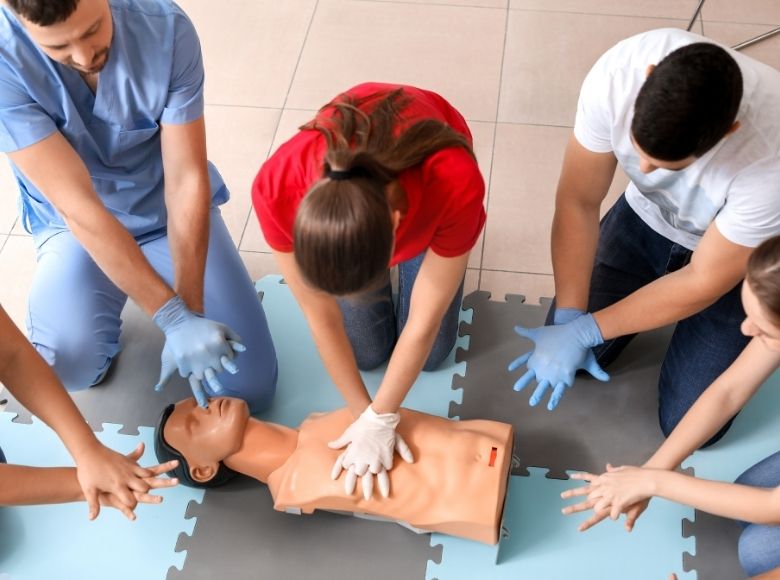
CPR training focuses on practical skills rather than theory. Participants practise the steps they would follow in a real emergency.
Key elements of a HLTAID009 CPR course include:
- recognising when someone is not breathing normally
- checking responsiveness and calling for help
- performing chest compressions correctly
- delivering rescue breaths
- using an automated external defibrillator
- following the DRSABCD emergency response process
The training emphasises repetition so that participants feel confident performing the technique if a real emergency occurs.
Why More People Are Learning CPR in 2026
Public awareness around emergency response has grown steadily over the past decade. Many people now recognise that CPR is not complicated, yet it can have a major impact during the first moments of a cardiac emergency.
Short courses make the training accessible, and community organisations increasingly encourage participation. A CPR course Wollongong or nearby training session can be completed within a short time, but the knowledge gained can last for years.
For many participants, the experience changes how they think about emergencies. Instead of assuming someone else will know what to do, they realise they could be the person who helps.
Take the Step That Could Save a Life
Emergencies rarely provide time to prepare. When they occur, the people already present are the ones who can act first.
Skillmate Education Group offers practical CPR training designed for real-world situations. Completing a HLTAID009 CPR course provides the knowledge and confidence needed to respond quickly and effectively.
If you have been looking for CPR training near me, enro ling with Skillmate Education Group is a straightforward way to learn a skill that could make a life-saving difference.
FAQs
What is the HLTAID009 CPR course?
The HLTAID009 CPR course (Provide Cardiopulmonary Resuscitation) is a nationally recognised training unit that teaches participants how to recognise cardiac emergencies, perform CPR on adults, children and infants, and use an automated external defibrillator (AED) until emergency services arrive.
Who can enrol in a CPR course at Skillmate Education Group?
Skillmate’s CPR course (HLTAID009) is open to anyone who wants to assist in an emergency, including members of the public, workplace teams and individuals who need CPR certification for job requirements.
How long does a CPR course take to complete?
A CPR course (HLTAID009) with Skillmate Education Group typically takes around two hours and combines online learning with a short practical session where participants demonstrate CPR and emergency response skills.
What skills do participants learn in the HLTAID009 CPR course?
The HLTAID009 CPR course teaches how to assess emergency situations, follow the DRSABCD response process, perform chest compressions and rescue breaths, and use an AED to support someone experiencing cardiac arrest.
Why is CPR training important for everyday people?
CPR training equips everyday people with practical skills to respond during cardiac emergencies in workplaces, homes or public places, helping maintain blood circulation and oxygen flow until professional medical help arrives.